 Add to Chrome
 Add to Firefox
 Add to Edge
ExpWeaver: LLM Agents Learn from Experience via Latent RAG
May 31, 2026
Experience learning has achieved promising results in enhancing LLM agent planning and reasoning by integrating past interactions as reusable knowledge. However, existing methods remain confined to explicit text space, retrieving experiences via semantic similarity and concatenating them into the context window, leading to substantial token overhead and a decoupled architecture that separates retrieval from generation. To address these limitations, we propose ExpWeaver, a framework that enables LLM agents to learn from experience via latent retrieval-augmented generation, without requiring a separate RAG module. ExpWeaver encodes experiences using the LLM's own hidden states, retrieves relevant experiences directly in latent space at each decoding step, and integrates them through cross-attention aggregation and gated residual mechanisms. The entire pipeline is optimized end-to-end with reinforcement learning, supporting both generative and ranking tasks. We evaluate ExpWeaver on 13 diverse tasks spanning question answering, reasoning, coding, scientific prediction, and recommendation. Results demonstrate that ExpWeaver achieves state-of-the-art performance on 12 out of 13 tasks, outperforming the strongest baseline by over 6.8%; maintains token efficiency comparable to non-retrieval baselines while text-based retrieval methods require 1.5 to 2 times more tokens; and exhibits superior cross-domain generalization, outperforming the strongest baseline by 16.32% under zero-shot transfer and 15.21% under few-shot transfer. Our code for ExpWeaver is released at https://github.com/ulab-uiuc/ExpWeaver.

ExpGraph: Model-Agnostic Experience Learning with Graph-Structured Memory for LLM Agents
May 29, 2026Large language model (LLM) agents have shown strong capabilities in reasoning, tool use, and multi-step interaction, but they often solve tasks from scratch and fail to reuse successful strategies or failure lessons from prior experience. Fine-tuning on collected experience can improve reuse, but it is inflexible when stronger or more suitable executors emerge. We propose ExpGraph, a model-agnostic experience learning framework that enables frozen and replaceable LLM executors to improve through external experience reuse without parameter updates. ExpGraph summarizes historical trajectories into reusable skills and failure lessons, organizes them as nodes in a self-evolving experience graph, and retrieves useful experiences through graph diffusion and utility-aware ranking. A lightweight retrieval copilot is trained with reinforcement learning using feedback that compares executor performance with and without retrieved experiences, while the graph is updated online from downstream task outcomes. We evaluate ExpGraph on ExpSuite, covering question answering, mathematical reasoning, code generation, and multi-step agentic environments including ALFWorld and AppWorld. ExpGraph improves over the strongest baseline by 12.2% and 4.7% on static tasks with smaller and larger executors, and by 21.4% and 12.7% in agentic environments, while reducing average interaction steps by 12.7% and 21.6%. Ablations show that graph-structured experience, utility-aware ranking, and adaptive retrieval jointly enable effective experience reuse across diverse tasks and executor models.
LRanker: LLM Ranker for Massive Candidates
May 27, 2026Large language models (LLMs) have recently shown strong potential for ranking by capturing semantic relevance and adapting across diverse domains, yet existing methods remain constrained by limited context length and high computational costs, restricting their applicability to real-world scenarios where candidate pools often scale to millions. To address this challenge, we propose LRanker, a framework tailored for large-candidate ranking. LRanker incorporates a candidate aggregation encoder that leverages K-means clustering to explicitly model global candidate information, and a graph-based test-time scaling mechanism that partitions candidates into subsets, generates multiple query embeddings, and integrates them through an ensemble procedure. By aggregating diverse embeddings instead of relying on a single representation, this mechanism enhances robustness and expressiveness, leading to more accurate ranking over massive candidate pools. We evaluate LRanker on seven tasks across three scenarios in RBench with different candidate scales. Experimental results show that LRanker achieves over 30% gains in the RBench-Small scenario, improves by 3-9% in MRR in the RBench-Large scenario, and sustains scalability with 20-30% improvements in the RBench-Ultra scenario with more than 6.8M candidates. Ablation studies further verify the effectiveness of its key components. Together, these findings demonstrate the robustness, scalability, and effectiveness of LRanker for massive-candidate ranking.
Causal Decoding for Hallucination-Resistant Multimodal Large Language Models
Feb 24, 2026Multimodal Large Language Models (MLLMs) deliver detailed responses on vision-language tasks, yet remain susceptible to object hallucination (introducing objects not present in the image), undermining reliability in practice. Prior efforts often rely on heuristic penalties, post-hoc correction, or generic decoding tweaks, which do not directly intervene in the mechanisms that trigger object hallucination and thus yield limited gains. To address this challenge, we propose a causal decoding framework that applies targeted causal interventions during generation to curb spurious object mentions. By reshaping the decoding dynamics to attenuate spurious dependencies, our approach reduces false object tokens while maintaining descriptive quality. Across captioning and QA benchmarks, our framework substantially lowers object-hallucination rates and achieves state-of-the-art faithfulness without degrading overall output quality.
UniRec: Unified Multimodal Encoding for LLM-Based Recommendations
Jan 27, 2026Large language models have recently shown promise for multimodal recommendation, particularly with text and image inputs. Yet real-world recommendation signals extend far beyond these modalities. To reflect this, we formalize recommendation features into four modalities: text, images, categorical features, and numerical attributes, and highlight the unique challenges this heterogeneity poses for LLMs in understanding multimodal information. In particular, these challenges arise not only across modalities but also within them, as attributes such as price, rating, and time may all be numeric yet carry distinct semantic meanings. Beyond this intra-modality ambiguity, another major challenge is the nested structure of recommendation signals, where user histories are sequences of items, each associated with multiple attributes. To address these challenges, we propose UniRec, a unified multimodal encoder for LLM-based recommendation. UniRec first employs modality-specific encoders to produce consistent embeddings across heterogeneous signals. It then adopts a triplet representation, comprising attribute name, type, and value, to separate schema from raw inputs and preserve semantic distinctions. Finally, a hierarchical Q-Former models the nested structure of user interactions while maintaining their layered organization. Across multiple real-world benchmarks, UniRec outperforms state-of-the-art multimodal and LLM-based recommenders by up to 15%, and extensive ablation studies further validate the contributions of each component.
A Scalable Pretraining Framework for Link Prediction with Efficient Adaptation
Aug 06, 2025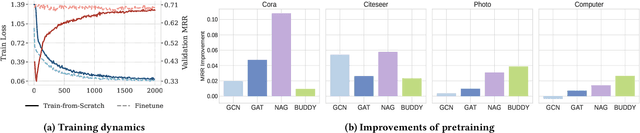

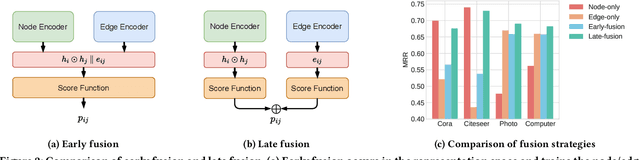

Link Prediction (LP) is a critical task in graph machine learning. While Graph Neural Networks (GNNs) have significantly advanced LP performance recently, existing methods face key challenges including limited supervision from sparse connectivity, sensitivity to initialization, and poor generalization under distribution shifts. We explore pretraining as a solution to address these challenges. Unlike node classification, LP is inherently a pairwise task, which requires the integration of both node- and edge-level information. In this work, we present the first systematic study on the transferability of these distinct modules and propose a late fusion strategy to effectively combine their outputs for improved performance. To handle the diversity of pretraining data and avoid negative transfer, we introduce a Mixture-of-Experts (MoE) framework that captures distinct patterns in separate experts, facilitating seamless application of the pretrained model on diverse downstream datasets. For fast adaptation, we develop a parameter-efficient tuning strategy that allows the pretrained model to adapt to unseen datasets with minimal computational overhead. Experiments on 16 datasets across two domains demonstrate the effectiveness of our approach, achieving state-of-the-art performance on low-resource link prediction while obtaining competitive results compared to end-to-end trained methods, with over 10,000x lower computational overhead.
Higher-order Structure Boosts Link Prediction on Temporal Graphs
May 21, 2025Temporal Graph Neural Networks (TGNNs) have gained growing attention for modeling and predicting structures in temporal graphs. However, existing TGNNs primarily focus on pairwise interactions while overlooking higher-order structures that are integral to link formation and evolution in real-world temporal graphs. Meanwhile, these models often suffer from efficiency bottlenecks, further limiting their expressive power. To tackle these challenges, we propose a Higher-order structure Temporal Graph Neural Network, which incorporates hypergraph representations into temporal graph learning. In particular, we develop an algorithm to identify the underlying higher-order structures, enhancing the model's ability to capture the group interactions. Furthermore, by aggregating multiple edge features into hyperedge representations, HTGN effectively reduces memory cost during training. We theoretically demonstrate the enhanced expressiveness of our approach and validate its effectiveness and efficiency through extensive experiments on various real-world temporal graphs. Experimental results show that HTGN achieves superior performance on dynamic link prediction while reducing memory costs by up to 50\% compared to existing methods.
Unified Semantic and ID Representation Learning for Deep Recommenders
Feb 23, 2025
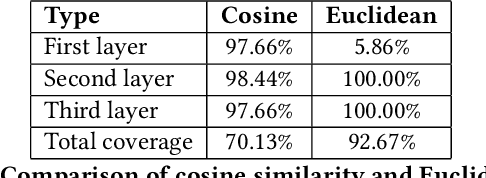

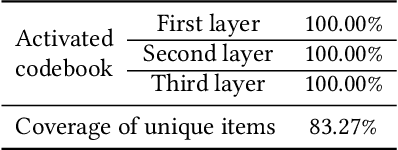
Effective recommendation is crucial for large-scale online platforms. Traditional recommendation systems primarily rely on ID tokens to uniquely identify items, which can effectively capture specific item relationships but suffer from issues such as redundancy and poor performance in cold-start scenarios. Recent approaches have explored using semantic tokens as an alternative, yet they face challenges, including item duplication and inconsistent performance gains, leaving the potential advantages of semantic tokens inadequately examined. To address these limitations, we propose a Unified Semantic and ID Representation Learning framework that leverages the complementary strengths of both token types. In our framework, ID tokens capture unique item attributes, while semantic tokens represent shared, transferable characteristics. Additionally, we analyze the role of cosine similarity and Euclidean distance in embedding search, revealing that cosine similarity is more effective in decoupling accumulated embeddings, while Euclidean distance excels in distinguishing unique items. Our framework integrates cosine similarity in earlier layers and Euclidean distance in the final layer to optimize representation learning. Experiments on three benchmark datasets show that our method significantly outperforms state-of-the-art baselines, with improvements ranging from 6\% to 17\% and a reduction in token size by over 80%. These results demonstrate the effectiveness of combining ID and semantic tokenization to enhance the generalization ability of recommender systems.
RAG vs. GraphRAG: A Systematic Evaluation and Key Insights
Feb 17, 2025Retrieval-Augmented Generation (RAG) enhances the performance of LLMs across various tasks by retrieving relevant information from external sources, particularly on text-based data. For structured data, such as knowledge graphs, GraphRAG has been widely used to retrieve relevant information. However, recent studies have revealed that structuring implicit knowledge from text into graphs can benefit certain tasks, extending the application of GraphRAG from graph data to general text-based data. Despite their successful extensions, most applications of GraphRAG for text data have been designed for specific tasks and datasets, lacking a systematic evaluation and comparison between RAG and GraphRAG on widely used text-based benchmarks. In this paper, we systematically evaluate RAG and GraphRAG on well-established benchmark tasks, such as Question Answering and Query-based Summarization. Our results highlight the distinct strengths of RAG and GraphRAG across different tasks and evaluation perspectives. Inspired by these observations, we investigate strategies to integrate their strengths to improve downstream tasks. Additionally, we provide an in-depth discussion of the shortcomings of current GraphRAG approaches and outline directions for future research.
Session-Level Dynamic Ad Load Optimization using Offline Robust Reinforcement Learning
Jan 09, 2025


Session-level dynamic ad load optimization aims to personalize the density and types of delivered advertisements in real time during a user's online session by dynamically balancing user experience quality and ad monetization. Traditional causal learning-based approaches struggle with key technical challenges, especially in handling confounding bias and distribution shifts. In this paper, we develop an offline deep Q-network (DQN)-based framework that effectively mitigates confounding bias in dynamic systems and demonstrates more than 80% offline gains compared to the best causal learning-based production baseline. Moreover, to improve the framework's robustness against unanticipated distribution shifts, we further enhance our framework with a novel offline robust dueling DQN approach. This approach achieves more stable rewards on multiple OpenAI-Gym datasets as perturbations increase, and provides an additional 5% offline gains on real-world ad delivery data. Deployed across multiple production systems, our approach has achieved outsized topline gains. Post-launch online A/B tests have shown double-digit improvements in the engagement-ad score trade-off efficiency, significantly enhancing our platform's capability to serve both consumers and advertisers.